Caeden Smilde

Design Work - fashion design, garment construction and patternmaking by Caeden Smilde

06 entries

Paper to pattern to runway - five garments and what each one cost me to learn.


purSUIT

MODA Spring 2026 · 2026

The newest thing I have made, and the furthest I have pushed a line.

Model on the MODA runway in a black jacket covered with vintage brooches and pins
MODA runway
Role
Design · Patternmaking · Construction · Direction
Year
2026

purSUIT is my line for MODA Spring 2026 - the newest work on this site and the furthest I have pushed a line.

I designed the garments and directed the film that carries them, which meant the two decisions stopped being separate: how a look is built and how it is seen were the same conversation the whole way through.

Everything in the four chapters below is in this one project.

Where it sits

purSUIT is the newest project on this site and the lead entry for a reason. It is the point where the three things I do - design, construction, and film - stopped being separate skills I was practising and became one process.

The film

The accompanying film is in Digital Content. I approached it as narrative rather than as documentation: what order the looks arrive in, what the sequencing does to the pace, and how a runway line reads when the camera decides what you see of it.
The 1975 Line

MODA Spring 2025 · 2025

A music-themed show, designed on scrap paper and finished on a runway.

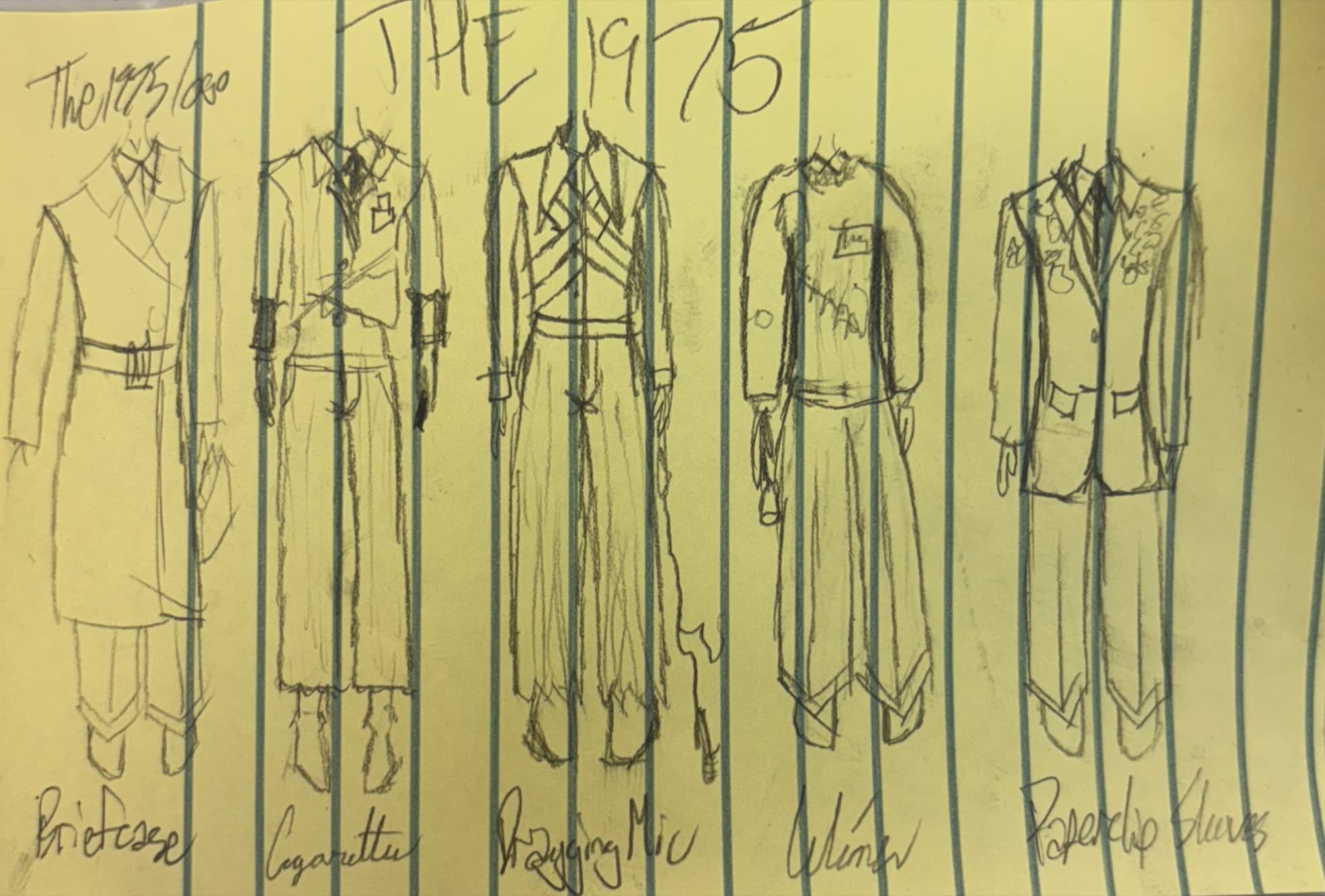
Original scrap-paper sketch on yellow legal pad titled The 1975, showing five named looks
The sketch
Role
Design · Construction · Styling
Year
2025

MODA's Spring 2025 show was built around music, so I took a band and made a line out of it.

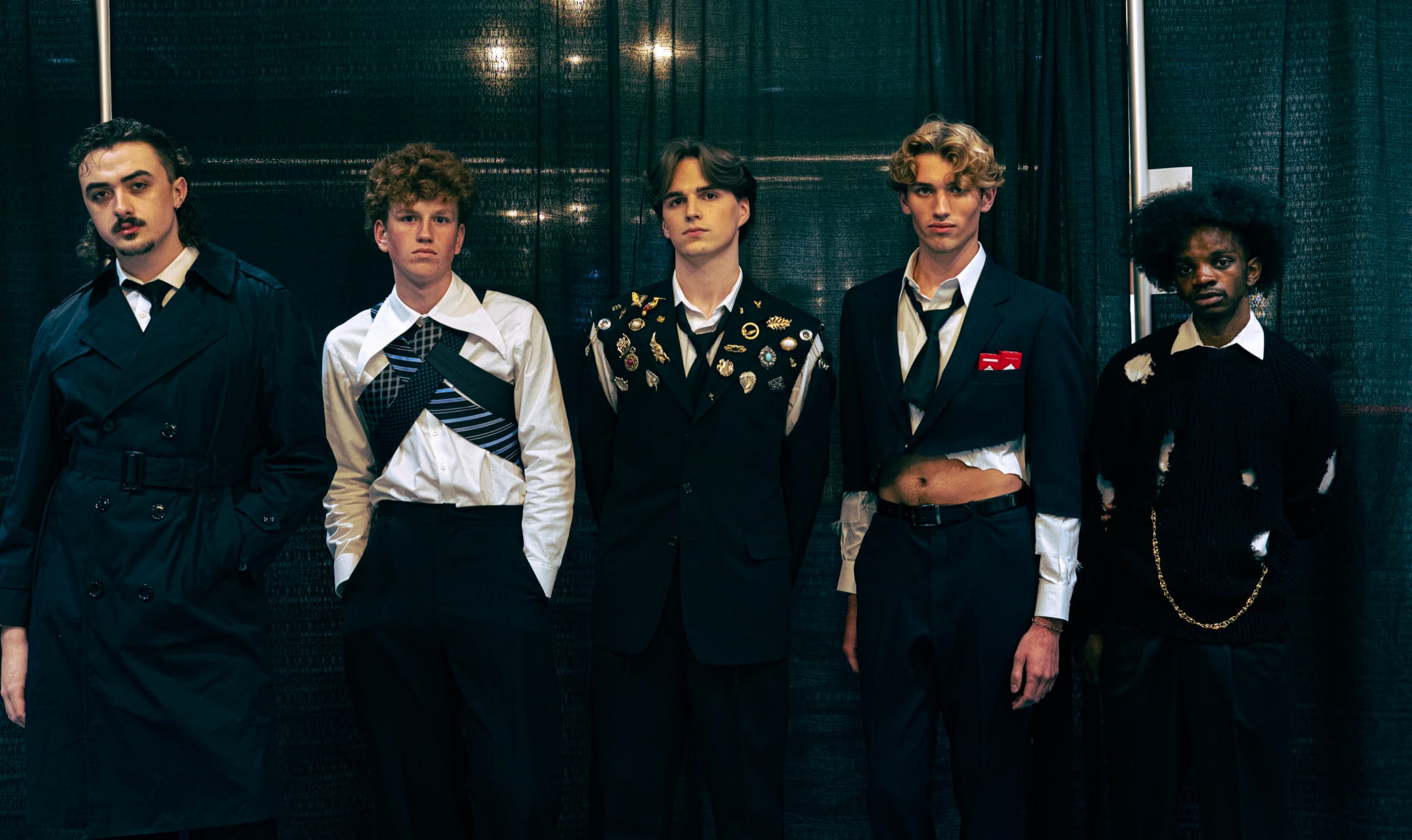
The design process started on scrap paper - fast, ugly, disposable sketches, because the ideas worth keeping survive being drawn badly. Several of those became constructed garments. The rest of the work was styling and deconstruction: deciding what to take apart, what to leave raw, and how the looks read as a group rather than as separate outfits.

Put the sketches next to the runway shots. Very little was lost in between.

Scrap paper on purpose

I do not sketch to make a nice drawing. I sketch to find out whether an idea holds up, which means drawing it badly and quickly, over and over, on whatever paper is on the table. The scraps that survive that are the ones worth cutting.

Styling and deconstruction

A runway line is not a set of garments - it is an argument delivered in order. A large part of this project happened after the garments existed: what gets deconstructed, what gets styled against what, and what order the audience receives it in.

Runway close-up of the brooch-covered jacket from the 1975 line under warm show lighting
Five models in the finished 1975 line, in black tailoring and loosened ties, backstage
The line, finished

Sketch to runway

The drawing on the left took four minutes on the back of something else. The garment on the right took a semester. Drag the seam.

Original scrap-paper sketch on yellow legal pad titled The 1975, showing five named looks
The sketch

SketchRunway - drag the seam, or use the arrow keys

Design Studio II

Design Studio II · 2025

Two garments, one customer, and a deadline that did not move.

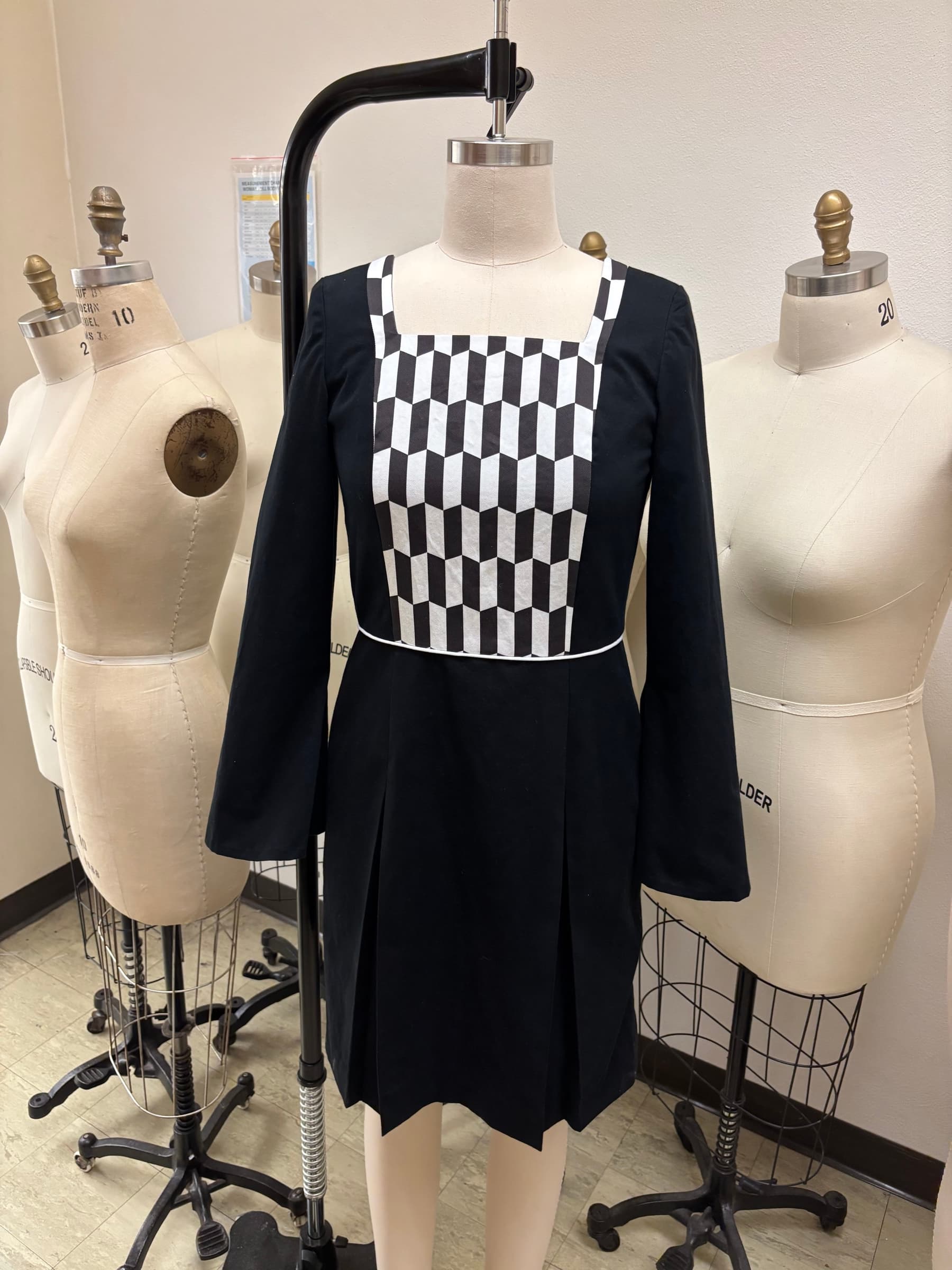
Black long-sleeved dress with a geometric black and white cube-print bib panel, on a dress form
Role
Design · Patternmaking · Construction
Year
2025

Two garments for women aged 25 to 35, built to work across mixed proportions rather than one idealised body.

That constraint is the whole project. Designing for a range of proportions changes where seams can go, how much ease a pattern needs, and which silhouettes are honest about fitting more than one person. The second constraint was the calendar: a fixed date, two finished garments, no extensions.

I learned more from the deadline than from the brief.

Designing for a range

A target customer stated as an age bracket is easy to nod at and hard to actually design for. Mixed proportions meant every fit decision had a second question attached to it - not "does this work" but "does this still work two sizes either side of the sample."

Deadline discipline

Two garments to a fixed date taught me to sequence work by risk: cut and fit the thing most likely to fail first, and leave the parts I already know how to do for the end.

Black long-sleeved dress with a geometric black and white cube-print bib panel, on a dress form
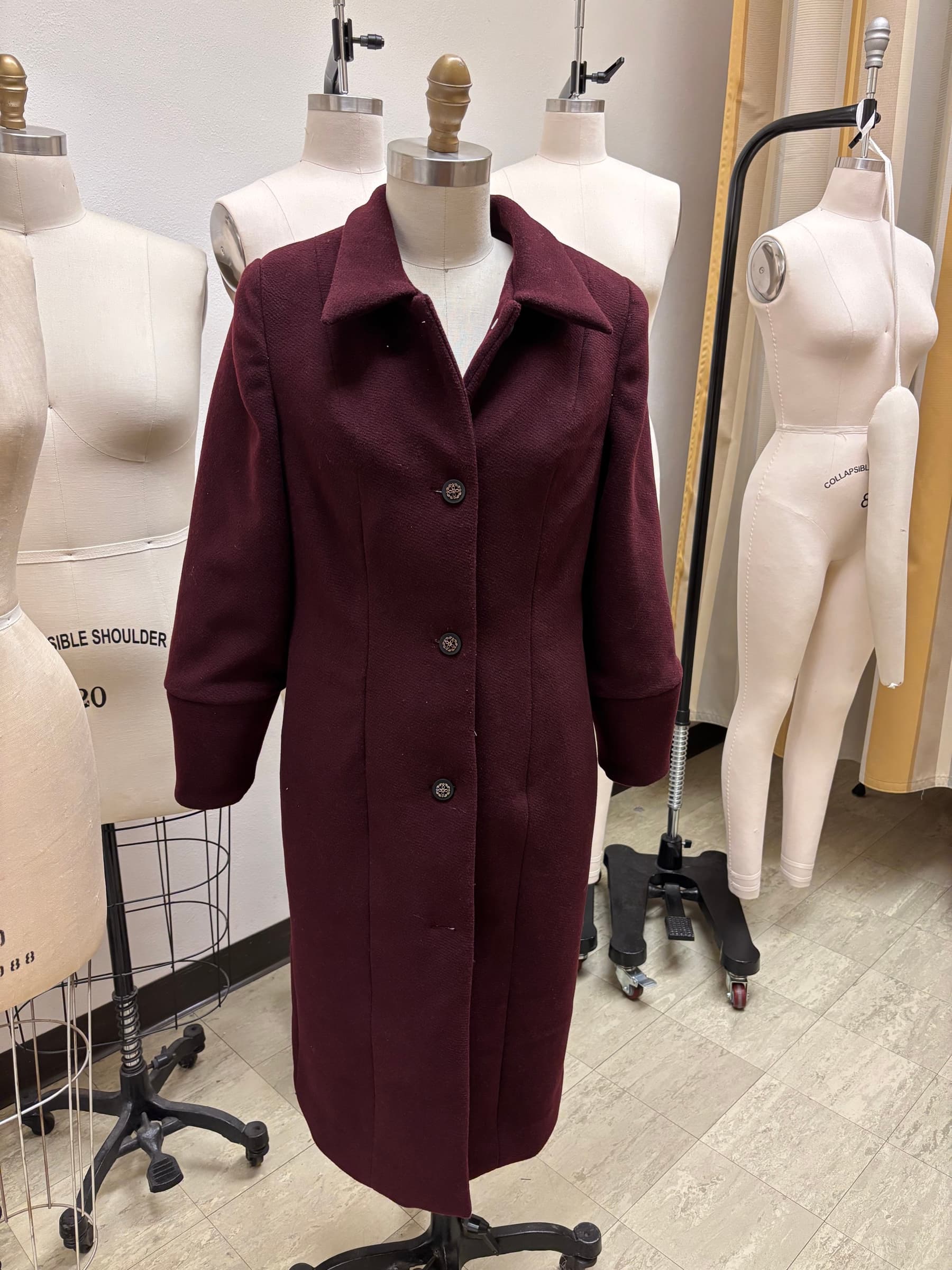
Full-length burgundy wool coat with a pointed collar and covered buttons, on a dress form

Mondrian Outfit

Design Studio I · 2024

Yves Saint Laurent got there first. I had to draft mine from nothing.

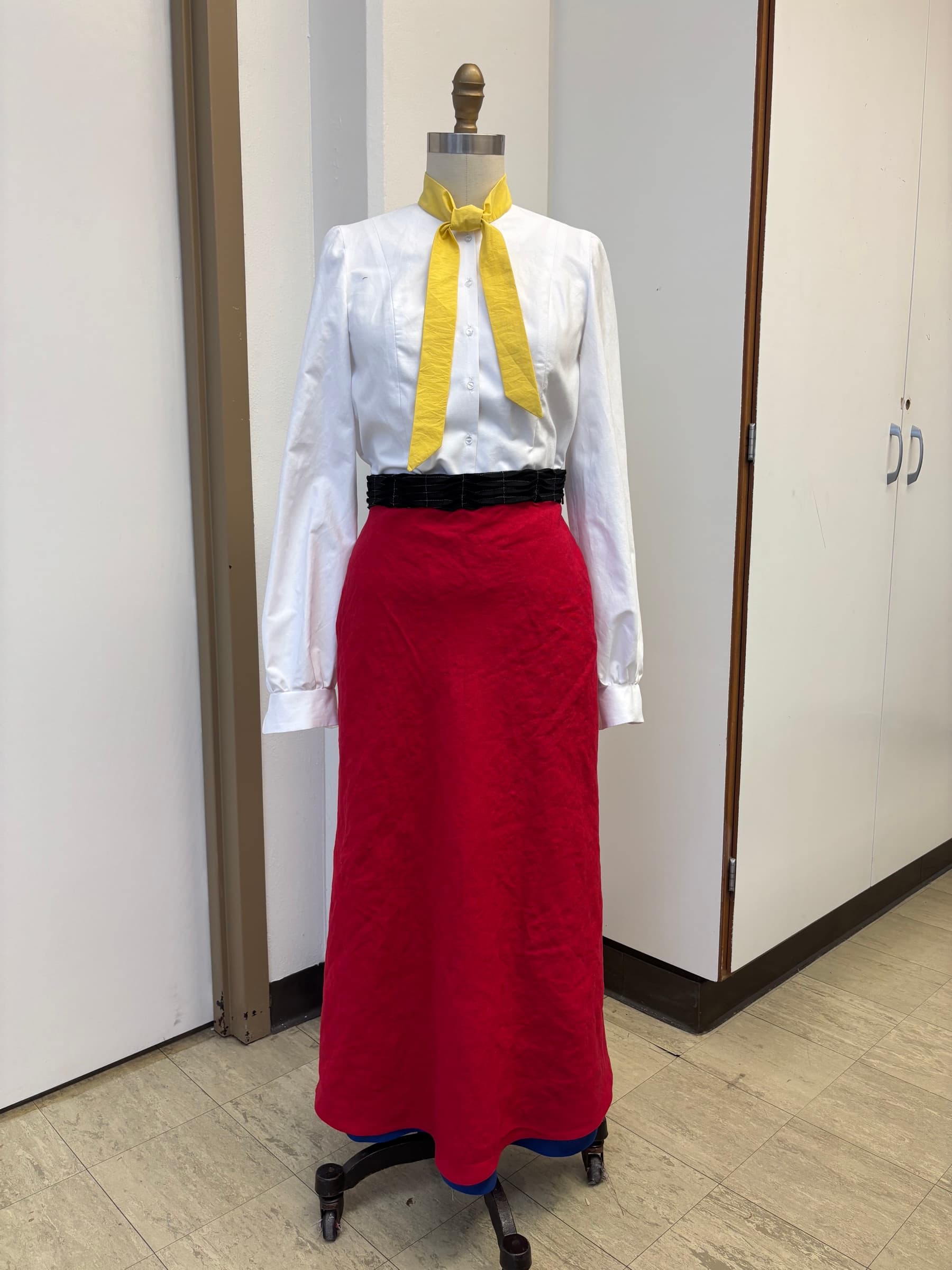
The finished Mondrian outfit: white blouse with a yellow neck tie and a red A-line skirt
Role
Design · Patternmaking · Construction
Year
2024

Saint Laurent's Mondrian dress was the starting point. Mine is a skirt and a blouse, and the pattern is self-drafted rather than adapted from a block.

Colour-blocking looks like a graphics problem until you try to build it - then it is a construction problem. Every division in the composition is a seam that has to be lined, layered, and tailored so the panels stay flat and the joins stay square. Getting the grid to hold its geometry on a moving body was the actual work.

A flat painting does not have to survive somebody sitting down.

Self-drafted, not adapted

Drafting the pattern myself rather than modifying an existing block meant the panel layout could be designed around the composition instead of the composition being squeezed onto someone else's seams.

The problem-solving

Lining, layering and tailoring were where this project actually lived. Each colour block is a separate piece; each join is a place the grid can go crooked. Solving that - keeping the lines reading as straight lines once the garment is on a body - is what I took out of Design Studio I.

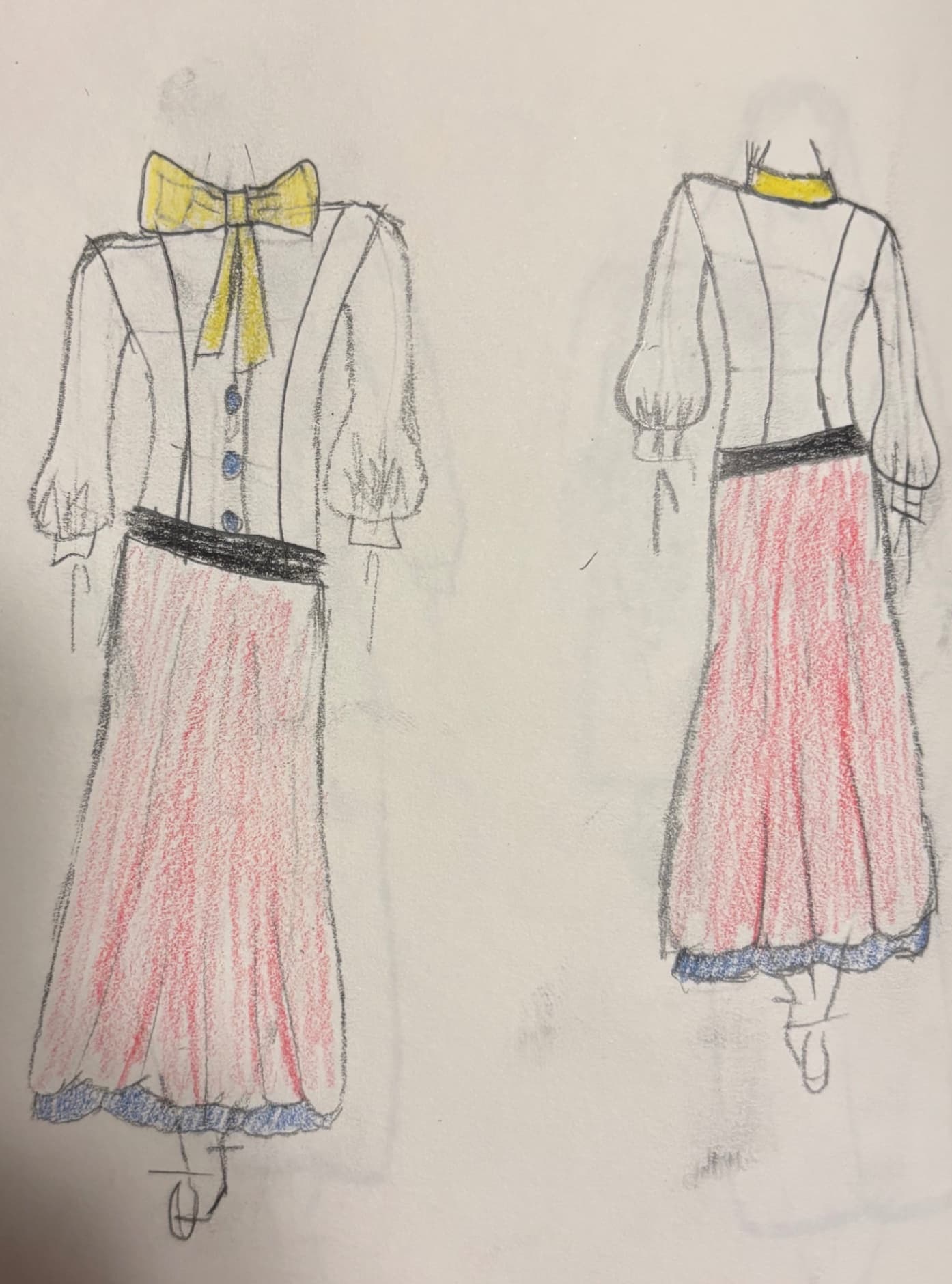
Hand-drawn front and back sketch of the Mondrian blouse and skirt in coloured pencil
Front and back, drafted

Blazer

Apparel Construction II · 2024

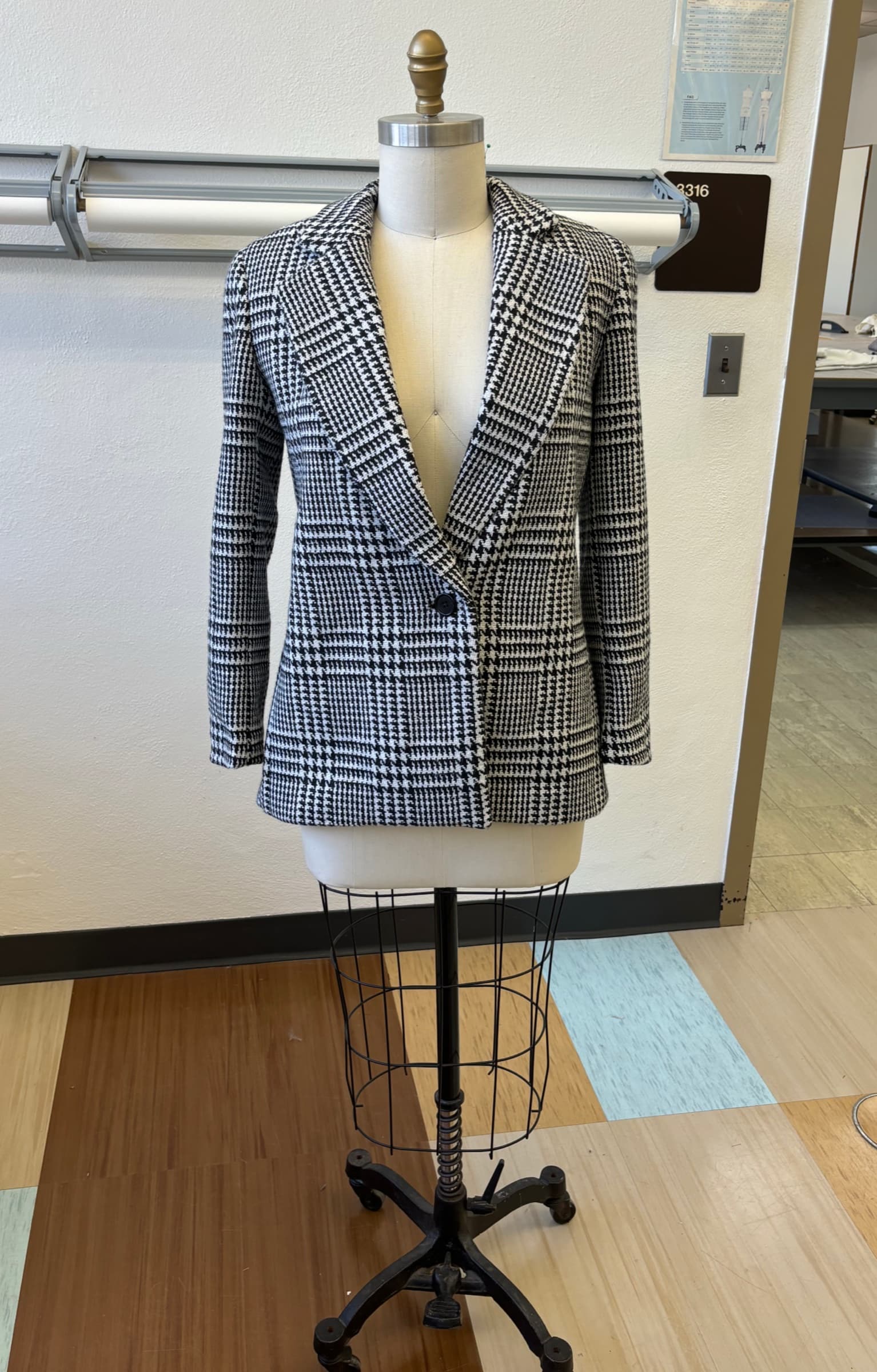
Wool, wide lapels, and every technique that only shows if you do it wrong.

Black and white glen-check wool blazer with wide notch lapels, on a dress form
Apparel Construction II

4 construction details - hover or tab through

Role
Patternmaking · Tailoring · Construction
Year
2024

Built from an industry pattern in wool, with wide lapels - which is a polite way of saying there was nowhere to hide.

This is a catalogue of tailoring techniques: pad stitching and catch stitching, shoulder pads set to carry the line, and a bagged lining so the inside finishes as cleanly as the outside. Wide lapels magnify a bad roll line. A bagged lining hides nothing from the person who made it.

Nobody ever compliments pad stitching. They just notice when it is missing.

Working from an industry pattern

Using an industry pattern rather than drafting my own put the emphasis entirely on execution. The shape was decided; whether it came out right was down to technique.

The techniques

Pad stitching and catch stitching to build and hold shape. Shoulder pads set to support the shoulder line without flattening the wool's drape. A bagged lining, which is the difference between a garment that is finished and one that has merely stopped being worked on.

Illustration

Illustration portfolio · Undated

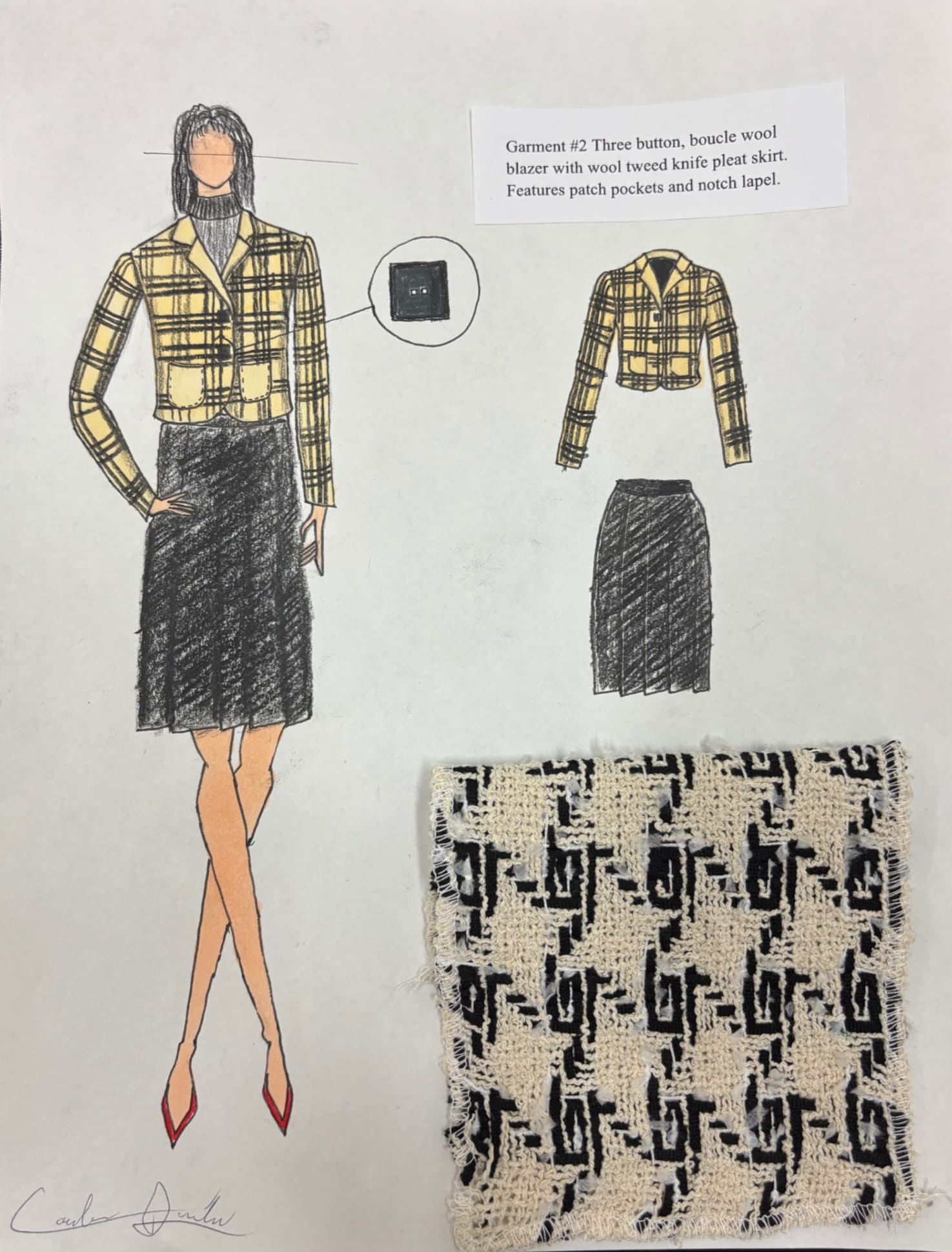
Rendered by hand, with the actual cloth stapled to the page.

Croquis of a yellow plaid boucle wool blazer and grey knife-pleat skirt with a tweed swatch
Garment 2
Role
Illustration · Fabric Development · Specification
Year
Undated

Flats tell a factory what to build. These tell you what it will feel like.

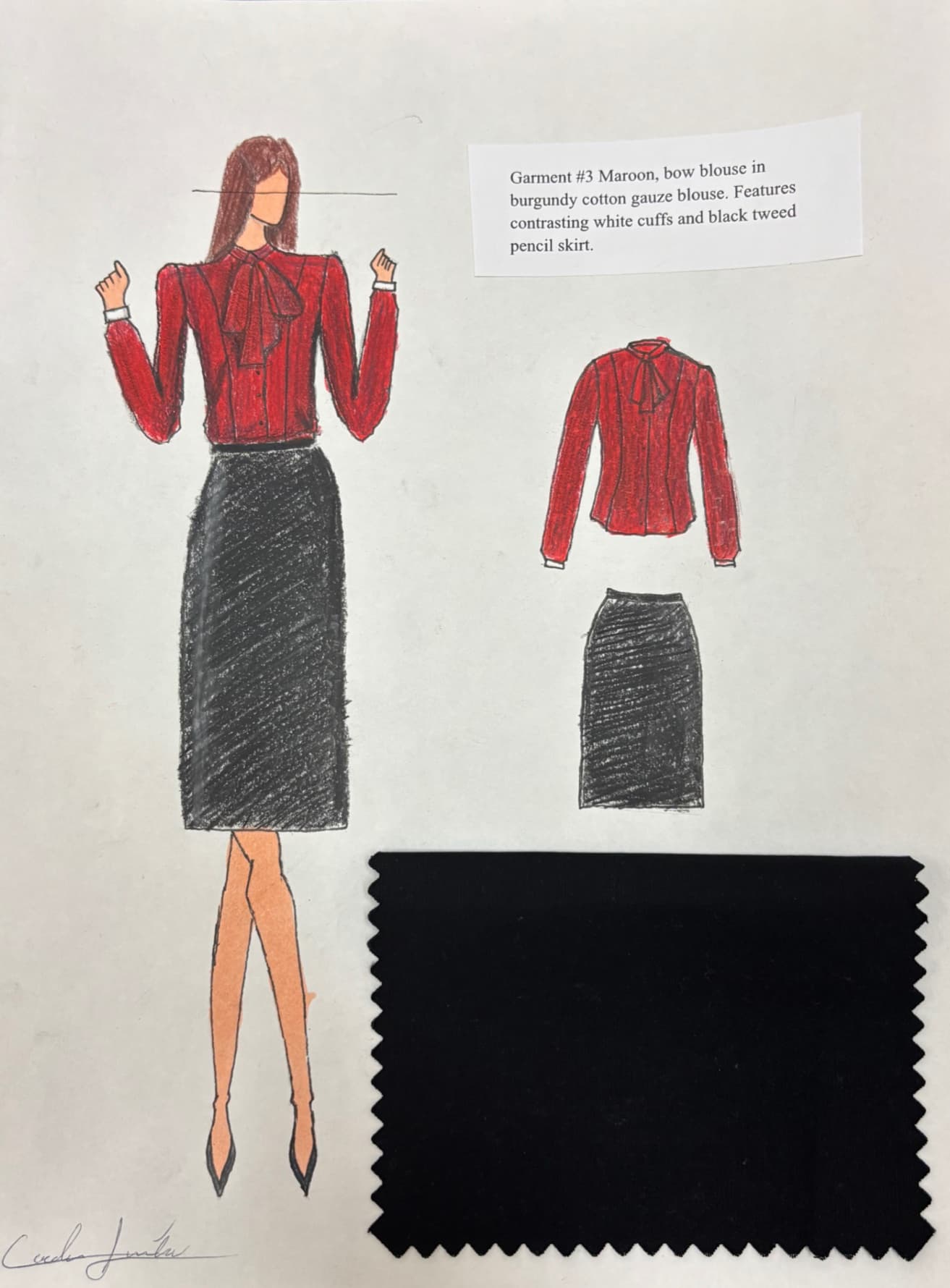
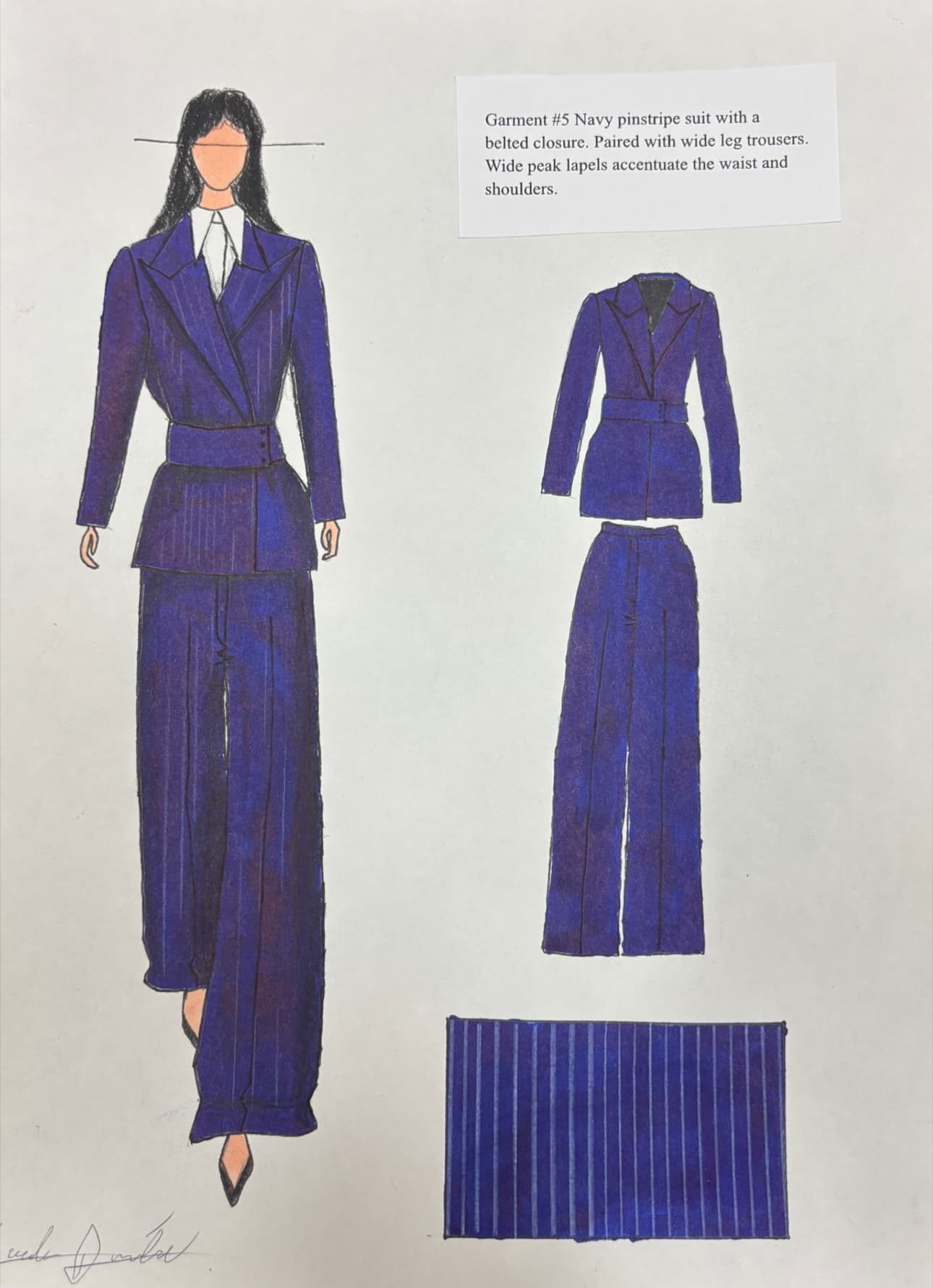
Each plate carries a rendered figure, a technical flat of the same look, a written spec, and a swatch of the real cloth attached to the page - boucle wool against a tweed knife pleat, burgundy cotton gauze against black tweed, navy pinstripe with a belted closure and wide peak lapels.

A drawing can lie about drape. A swatch stapled next to it cannot.

Why the swatch is on the page

A rendered illustration is a proposal. Putting the actual fabric beside it turns the proposal into something checkable: the weight, the hand and the way the cloth takes a fold are all right there, next to the drawing that claims them.

Figure, flat, spec

Every plate does the same three jobs - the figure sells the look, the flat explains the construction, and the written spec names the details that neither drawing can carry on its own.

Croquis of a maroon bow blouse and black tweed pencil skirt with a black fabric swatch
Garment 3
Croquis of a navy pinstripe belted suit with wide-leg trousers and a pinstripe swatch
Garment 5

Next chapter

02CAD

Where a drawing stops being a drawing and becomes something a factory can build.

Continue